Necklace Length Visualizer
Choose your desired length to preview where the necklace sits on a model, then compare other lengths before you decide.
Try a Chain on Your Photo
Add your photo
Drag & drop, or tap to choose. A head-and-shoulders shot works best.
A flat preview to judge length & proportion — not a photoreal render. Confirm fit with the visualizer.
Private by design — your photo is read on your device and never uploaded. For exact drop by length, switch back to the model view.
Quick Answer
The most popular necklace length is 18 inches (46 cm), also called princess length, sitting just below the collarbone on most women. Men's chains run 20–24 inches (51–61 cm), with 22" the most common. Preview any length on a model below, or try a real chain on your own photo.
Master Necklace Length Chart
Explore six standard necklace lengths, drawn at scale on the same body and shown in inches and centimeters. Whether you call it a necklace size chart or a chain length chart, these ranges are based on GIA (Gemological Institute of America) published guidance and the top jewelry retailer guides. Click any length to preview it on the model.
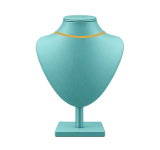
Collar
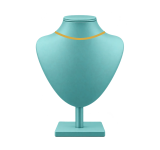
Choker
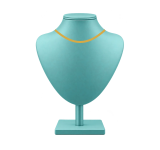
Princess length
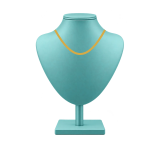
Matinee length
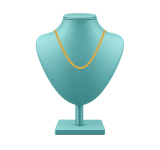
Opera
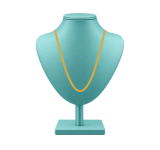
Rope
| Length | Inches | Centimeters | Where it sits |
|---|---|---|---|
| Collar | 12–13 in | 30–33 cm | Tight at throat |
| Choker | 14–16 in | 36–41 cm | Base of neck |
| Princess | 17–19 in | 43–48 cm | Below collarbone |
| Matinee | 20–24 in | 51–61 cm | Upper chest |
| Opera | 28–34 in | 71–86 cm | Below bust |
| Rope | 36+ in | 91+ cm | At or below navel |
Expert Tips from BriteCo's Gemology Team
Three rules that take a necklace from "fine" to "fits perfectly."

Same chain, different frame. A 16" chain reads as a choker on a 13" neck and a tight collar on a 16" neck. To find your ideal chain length, measure your neck first, then use the visualizer to see how each length falls on a model.

Heavy pendants drop the chain. A pendant over about 5 g can pull the chain ½–1" lower than the bare-chain estimate suggests. Consider a slightly shorter chain if you want the pendant to sit higher.

The 2-inch layering rule. Start with chains that differ by at least 2" in total length to help reduce overlapping and tangling. The actual vertical separation will vary with fit and pendant weight.
"Every necklace looks different on a different frame. What works on the model rarely works the same way on you; measure first, then buy."BriteCo gemology team

How to Keep Your Stacked Necklaces from Tangling
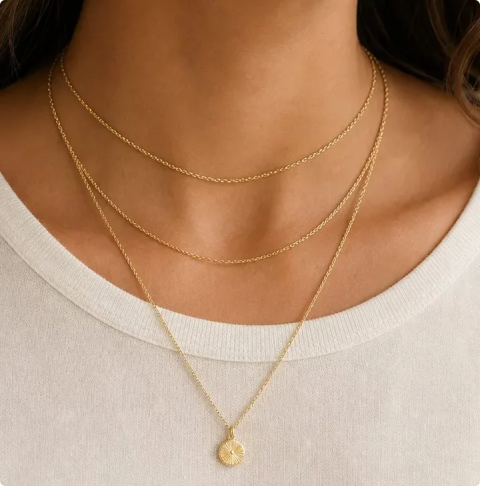
Length Guide by Frame
The same necklace length wears differently across body types. A 16" choker that drapes comfortably on a slim neck can sit tight at the throat on a neck measuring 16" or more. Use the comparison below, then confirm the fit in the visualizer.
| Length | Slimmer frame | Broader frame |
|---|---|---|
| Collar (12–13 in) | Statement/vintage only. Can feel constricting daily. | Rarely worn; too short for a 16"+ neck. |
| Choker (14–16 in) | Everyday choice. Pairs with crew, scoop, and off-shoulder necklines. | Tight at 16"+ necks. Skip unless layering. |
| Princess (17–19 in)Most popular | A versatile default. Works with many necklines and shows pendants well. | Sits at the collarbone; a slightly longer chain can create more drop. |
| Matinee (20–24 in) | A 20" chain can reach toward the upper bust and may dominate a 5'2"–5'5" frame. | Standard range. 22" is a practical single pick. |
| Opera (28–34 in) | Dramatic with formal attire or layered as the anchor. | Casual statement piece or anchor in a stack. |
| Rope (36+ in) | Bold single piece over a plain top. Less common for daily wear. | Wears over T-shirts and sweaters; usually too long under collars. |
Slim-frame gift defaults: 18" everyday · 20" layering · 16" for choker fans.
Broader-frame gift defaults: 22" everyday · 24" T-shirts/layering · 20" for daily collared shirts.
Standard Men's Chain Lengths
| Length | Where it sits | Common use |
|---|---|---|
| 18" / 46 cm | High at the collarbone | Layering only |
| 20" / 51 cm | At the collarbone | Dress-shirt collars |
| 22" / 56 cm | Just below the collarbone | Most popular men's length |
| 24" / 61 cm | Upper chest | T-shirts, casual layering |
| 30" / 76 cm | At mid chest | Statement/hip-hop style |
Chain Thickness for Broader Frames
A 1.5 mm chain can appear very fine on a broader frame. Match thickness to how you plan to wear it:




Pro Layering Guide
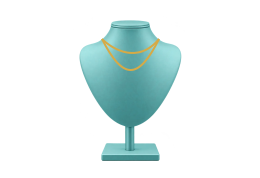
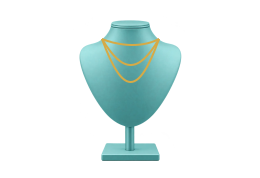
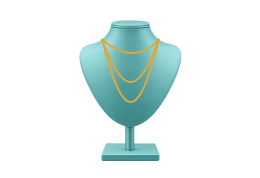
When layering two necklaces, begin with combinations that have enough difference in chain length to sit apart. A useful starting rule is to choose chains with total lengths at least 2" apart to limit overlap and tangling. The actual drop depends on your frame and any pendants.
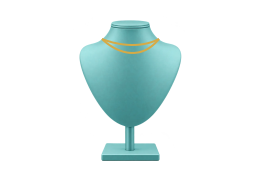
Two-strand classic
Two-strand bold
Three-strand
Three-strand long
Anchor-piece rule. Pick one focal piece, usually the longest chain, often with a pendant. Plain chains above frame it instead of competing.
Mixing metals. Let one metal dominate (two of three chains) and use another for visual interest. Rose gold works as a contrast in either direction.
- Choosing three chains all within 1" of each other, which can cause tangling.
- Stacking three statement pendants instead of one clear focal point.
- Mixing metals without an intentional contrast.
- Layering on very thin chains that can tangle around heavier ones.
Pendant Size Guide
For a pendant necklace, match the pendant size to the chain length, not the other way around. The pendants below are drawn to relative scale.
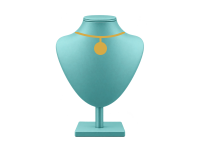
Tiny
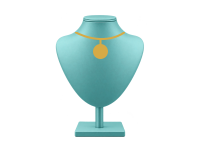
Small
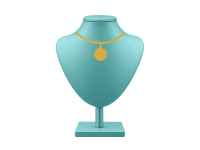
Medium
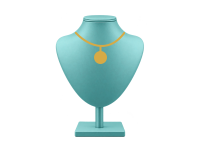
Large
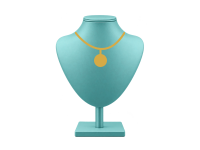
Statement
Heavy pendants (10 g+). Pendant weight matters. Choose a sturdy bail and pair heavier pieces with rope, curb, or Figaro chains at least 1.5 mm thick. Thin cable chains may stretch over time.
In a layered look. Let the longest chain carry the pendant. It draws attention to one focal point, while plain chains above frame it. Multiple pendants in one stack may scratch each other.
Neckline Pairing Guide
Choose a necklace that complements the neckline of your outfit. Different shapes either showcase a chain or hide it, so match the length to the garment's opening.
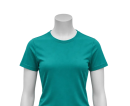
Crew neck
Let the chain sit just below the collar.
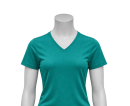
V-neck
End the chain at or just above the V.
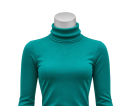
Turtleneck
Shorter lengths may disappear under the high neckline.
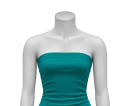
Strapless
Make the bare collarbone the focal point.

Button-down (open)
Let the chain drop into the opening.

Button-down (closed)
Choose a length that sits above the buttons.
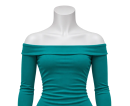
Off-the-shoulder
Keep the shoulder line as the focal point.
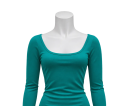
Scoop neck
Let the chain land within the scoop curve.
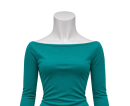
Boat neck
Choose a short chain parallel to the neckline.
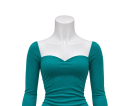
Sweetheart
Center the chain above the dip.
Pro tip. Avoid ending a chain exactly on the fabric edge. Place it clearly above or below the neckline so it does not appear stuck.
How to Measure a Necklace at Home
To determine your necklace size, you can measure your neck before buying or check the full length of a necklace you already own. Neck circumference and finished chain length are two different measurements.
Measuring Your Neck for a Necklace
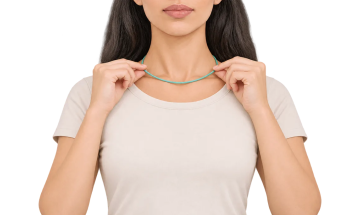
Wrap a string
Wrap a string around your neck, keeping it at the base of the neck and loose enough to slide a finger underneath. A soft tape measure also works if you have one.
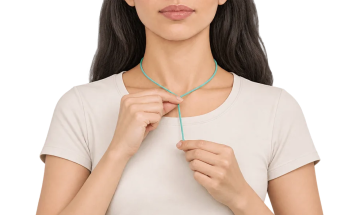
Pinch where the ends meet
Hold the pinch at the front of your neck, so the loop stays relaxed and keeps its size.
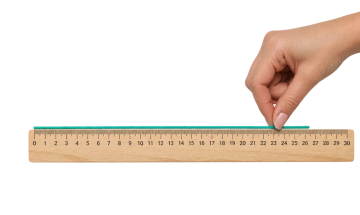
Lay flat against a ruler
Lay the string flat against a ruler and measure from one end to the pinch point. That number is your neck circumference, not the finished chain length.
Add inches for the drop you want:
Measuring an Existing Necklace
Unclasp your existing necklace and lay the full chain flat in a straight line next to a ruler. Measure from one end to the other, including the clasp. That is the full chain length. If you instead measure a clasped necklace laid flat as a loop, you need to double the end-to-end measurement to approximate its full length. A pendant adds extra drop below the chain.
- Measuring while leaning forward. The neck flexes, so measure standing relaxed.
- Pulling the string too tight. Necklaces should drape comfortably, so let the string just touch the skin.
- Forgetting that a pendant adds distance below the lowest point of the chain.