Independent Insurance Agent Survey 2025:
The Homeowners Insurance Pressure Cooker and How Stand-Alone Jewelry Policies Can Help
BriteCo Research Report
BriteCo Research Report

Insurance agents from across the US are helping clients manage dramatic increases in homeowners and renters insurance premiums by educating them on the benefits of moving valuable personal jewelry items on a homeowners rider or floater policy.
By getting a stand-alone jewelry policy, clients can save money and avoid any impact on their homeowners or other insurance coverage if they have to make a jewelry claim.
This annual survey from BriteCo highlights the challenges and opportunities independent insurance agents face as client coverage costs continue to rise.

Homeowners (HO) premium increases are still the dominant client pain point:
63.1% of agents said more than 75% of their clients saw an HO premium increase in the last year.

Non-renewals are meaningful, but less prevalent than premium increases:
77.0% of agents said less than 25% of their clients received an HO non-renewal notice in the last year.

The “why” is consistent: repair costs and catastrophe risk lead the list:
Repair costs (74.5%) and climate-related disasters (70.3%) were the most-cited drivers of premium increases and non-renewals.

Stand-alone jewelry is fast becoming a core premium-management strategy:
50.8% of agents recommend replacing jewelry riders/floaters with a stand-alone policy when helping clients manage HO costs.

The education gap has shifted as agents are increasingly aware, but clients still lag:
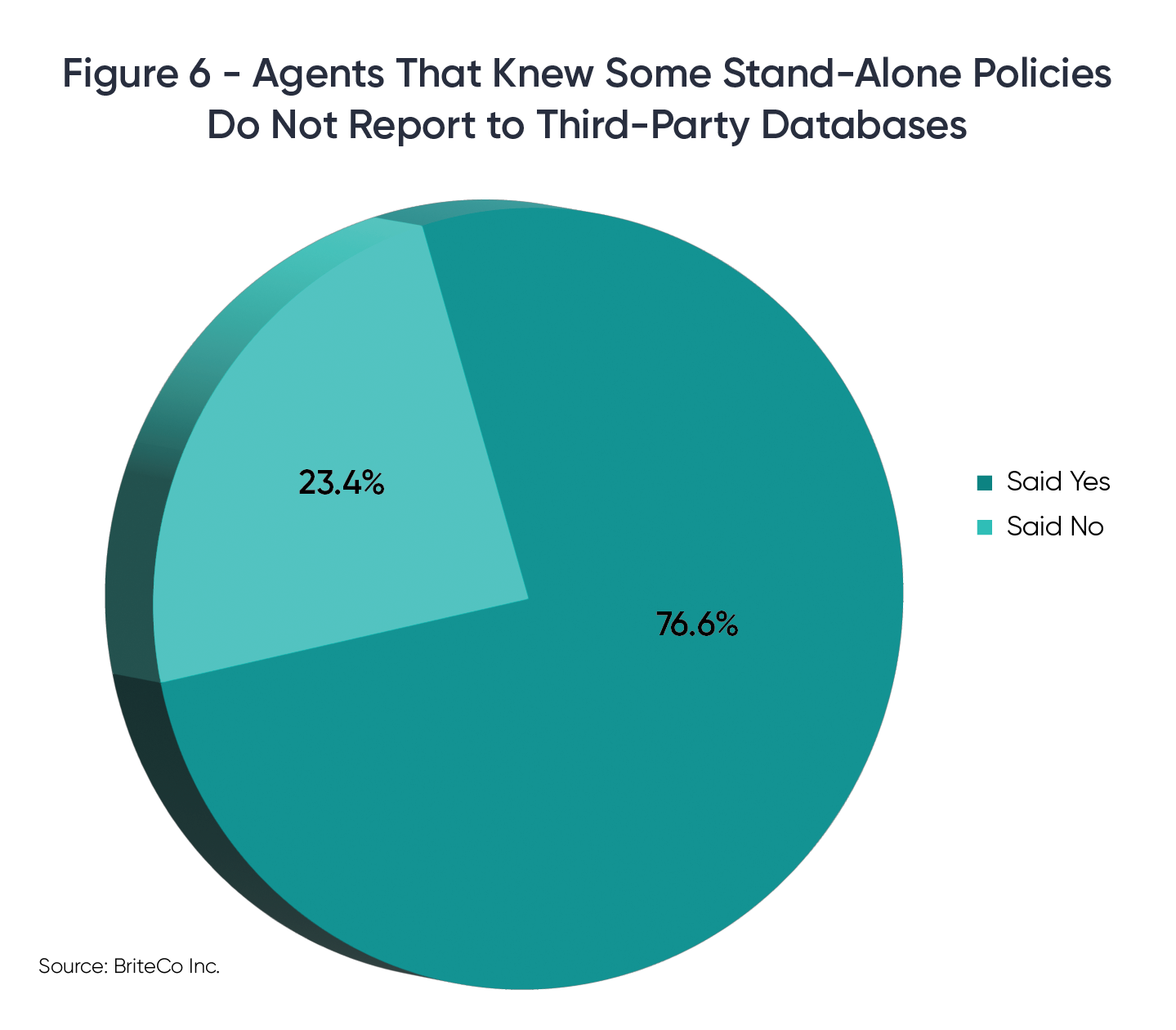
76.6% of agents know stand-alone jewelry claims typically do not report to third-party databases like CLUE or A-PLUS, yet 54.4% said clients do not understand the potential premium/renewal impact of a jewelry claim made with HO insurance.

CONDUCTED: NOV-DEC 2025

PARTICIPANTS: 427 INDEPENDENT INSURANCE AGENTS

GRAPHIC REACH: ALL 50 STATES, WITH A FOCUS ON FL, TX,CA

FOCUS: HO INSURANCE TRENDS AND JEWELRY COVERAGE STRATEGIES
This report reflects 427 self-reported responses from independent agents who chose to participate in the BriteCo agent survey from Nov 11, 2025–Dec 30, 2025, and several questions allowed multiple selections. Results came from agents representing all 50 states in the US.
The broader homeowners market backdrop helps explain why agents reported “repair costs” and “climate events” so strongly in responses. Structural replacement costs have risen sharply in recent years, and catastrophe frequency and severity continue to pressure underwriting when it comes to pricing.

According to survey responses, premium increases are nearly universal across agent books, while non-renewals are more concentrated. That combination often forces agents into difficult conversations with clients about deductibles, coverage tradeos, mitigation, and moving certain risks on the HO policy when appropriate.

According to agents, the top drivers of HO policy premium increases and non-renewals strongly reflect the external environment:
This alignment matters because it suggests agents’ messaging will resonate more when it connects “what’s happening nationally” to “what you can control locally.”

To help combat the problem, agents are actively using both traditional levers and “coverage architecture” changes, including moving jewelry off of clients’ HO policies.
The results are aligned with a broader industry emphasis on mitigation tools (including smart home sensors) as part of loss-prevention and pricing-stability efforts. But, more importantly, the results strongly suggest that stand-alone policies for items like jewelry are no longer a niche recommendation; it is rapidly becoming part of mainstream premium-management conversations.

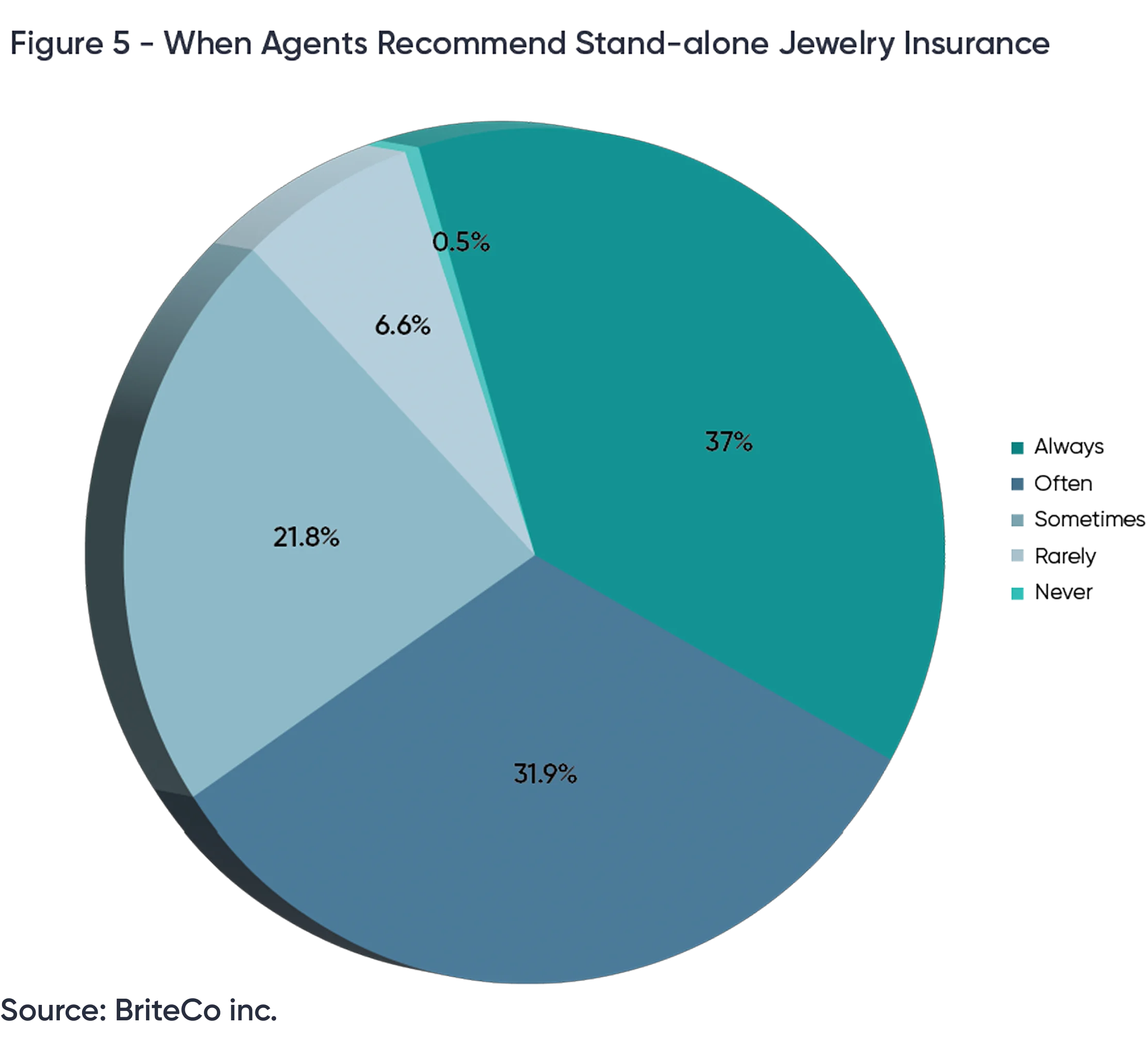
The frequency of agents recommending stand-alone jewelry insurance to clients is high: 68.9% of agents recommend stand-alone jewelry insurance always or often.
That is a strong indicator that agents see meaningful value in specialized coverage, especially when HO riders/floaters are creating pricing or renewal friction. For context, BriteCo’s agent survey report in 2024 showed a similar pattern of frequent recommendations of stand-alone jewelry policies.
Stand-alone jewelry claim reporting is a “behavior amplifier” for agents: Those who understand it recommend stand-alone far more often.
That’s because even one jewelry claim when reported to data loss-history services like CLUE (Comprehensive Loss Underwriting Exchange) or A-PLUS, a loss-history reporting service for personal lines such as auto and property, can impact an HO policy.
This data loss history is typically used by insurance carriers to assess an individual’s risk profile and determine premium costs, or to possibly trigger a policy non-renewal. Both provide about seven years of claim history for underwriting and rating decisions.
A separate and important nuance to consider: consumer-facing guidance notes that claims can appear even when closed without payment, depending on how the event was reported (as a claim vs. an inquiry).
76.6% said Yes, they knew some stand-alone jewelry policies do not report jewelry claims to third-party databases such as CLUE or A-PLUS.
23.4% said No, were not aware.
BriteCo’s 2024 agent survey report explicitly highlighted this claim reporting risk as a key differentiator for why stand-alone jewelry policies are to be recommended over an HO jewelry rider or floater.
Because CLUE and A-PLUS are widely used loss-history tools in underwriting and rating, agents need to recognize that not every stand-alone jewelry provider has the same reporting practices. Stating that a stand-alone jewelry insurance provider does not report to CLUE leaves open the question of whether the provider may report to another major loss history service, such as A-PLUS. Documentation from A-PLUS, for example, states that its property database contains loss-history data from over 1,375 insurers, representing over 95% of the market share.

BriteCo jewelry insurance specifically states that it does not report claims to either CLUE or A-PLUS; thus, agents considering other stand-alone jewelry providers for their clients should confirm in writing that these providers do not report to both CLUE and A-PLUS.
Because many clients do not understand the downstream impact of filing a jewelry claim associated with an HO policy, agents overwhelmingly believe this risk needs to be explained.
This pattern mirrors what BriteCo observed in its 2024 agent survey: client awareness lags agent concern, and agents view education as a best practice.


Agents have expressed the difficulties in selling stand-alone jewelry insurance is not “belief,” it is friction. Even when agents see stand-alone as valuable for their clients, issues with timing, conversion rates, and limited options can slow client adoption.
Here is what survey respondents noted as their biggest hurdles:
This pattern mirrors what BriteCo observed in its 2024 agent survey: client awareness lags agent concern, and agents view education as a best practice.
Open-ended responses from some respondents repeatedly pointed to speed and documentation as the “make or break” moments for selling stand-alone policies.
Common themes included: saving quotes, faster underwriting, smoother document/photo collection, clearer decline reasons, and interest in easier policy download/integration workflows.
Respondents of this survey operate nationwide, with an especially high representation in states known for severe weather and catastrophe exposure. In this dataset, 9.8% of respondents indicated they operate in all 50 states.
The most-represented regions included Texas (22.9% of respondents), Florida (21.3%), California (10.3%), Arizona (16.1%), and several Midwest/Northeast states in the low-to-mid 10% range (agents often selected multiple states).
Two other regional highlights worth calling out:

As this survey shows, stand-alone jewelry is functioning as a “pressure valve” inside the HO insurance conversation, not necessarily as a separate product pitch. The survey indicates many agents are already using the stand-alone jewelry insurance option to help manage HO premium and renewal risk, but they would appreciate streamlined workflows from providers as they ramp up efforts to deliver stronger client-facing education. While there are signs the HO insurance market may be stabilizing, HO premium increases that clients are facing across the country continue unabated through 2025. As a result, many agents are seeing more and more clients shopping for better pricing on home and auto insurance. In this volatile environment, agents are advised to seek better solutions to reduce clients’ insurance costs while maintaining coverage for their valuable jewelry.
If agents want to increase client adoption of stand-alone jewelry insurance policies, they should prioritize educating clients and shorten the path from “recommendation” to “bind.” Based on the observed friction points, suggestions include:
BriteCo directly addresses the challenges independent insurance agents face in educating their clients about the value of a stand-alone jewelry policy versus putting or leaving jewelry coverage on a client’s homeowners rider/floater.

Faster, easier quotes for clients through online portal.

Client savings 20% to 40% over any other jewelry policy.

No claims reporting to A-PLUS or CLUE, so no HO impact.

Easy agent appointment process. No quota.

Backed by AM Best A+ rated carrier. Licensed in all 50 states.

Coverage limits of $300k for individual items, and $750k per schedule.
BriteCo is a leading provider of modern jewelry and event insurance. Offering comprehensive jewelry and watch worldwide coverage for loss, theft, and damage, BriteCo also provides liability and cancellation insurance for weddings and events.
With policies backed by an AM Best A+ rated insurer, BriteCo delivers peace of mind for life’s milestones through fast online quotes, affordable monthly premiums, and full-value coverage.


