Celtic wedding traditions are a collection of rituals and symbols that trace back to the customs of the ancient Celts, whose culture is still celebrated today in Ireland, Scotland, Wales, and other Celtic areas. These ceremonies honor the union of two people while embracing the natural world, community, and ancestry. From handfasting ceremonies to the use of symbolic elements like knots, fire, and flowers, these traditions provide a meaningful way to bring ancient Celtic practices into modern weddings. Exploring these rituals reveals not only the beauty of the ceremonies but also the enduring legacy of Celtic heritage.
Dress
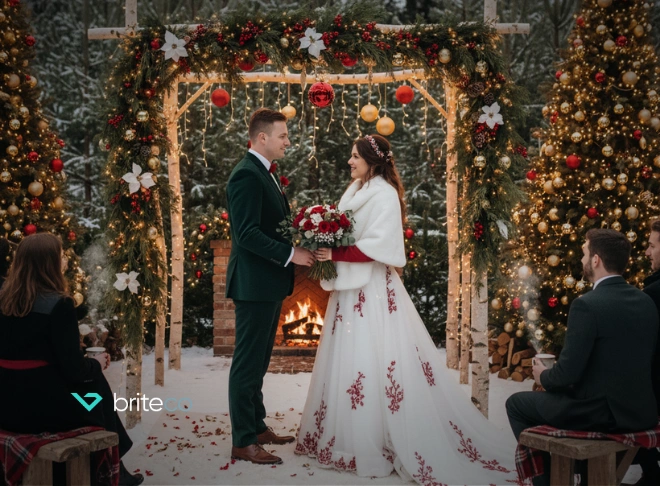
At a Celtic wedding, brides wear gowns that can range from simple and understated to intricately adorned. These dresses might be one-piece designs or feature an overdress paired with a bodice, and they’re crafted from fabrics like silk, cotton, velvet, or lace. The hallmark of Celtic bridal gowns is their dramatic, flowing sleeves and ethereal quality. Grooms traditionally wear a kilt made in the pattern of their clan or regional tartan. This is paired with a dress shirt, vest, tie, jacket, and sporran. One Celtic wedding tradition calls for pinning a sash of the groom’s tartan on his new spouse during the ceremony, symbolizing their inclusion as part of his family.
The Ceremony
A traditional Celtic wedding ceremony can be rich with symbolism and ritual, and couples can choose to incorporate a variety of elements that honor ancient customs. A tradition ceremony begins with the consecration of the space, using items like salt and herbs to purify a circular area for the union to take place. The couple is then presented to those gathered for the ceremony. Then, a bard might read a few words reflecting on the meaning of marriage. This is followed by the couple’s declarations of love and commitment and an exchange of rings. A highlight of the ceremony is the handfasting ritual, in which their hands are bound together with cords to symbolize their bond. A Celtic wedding might also include a passing of light, in which a lit candle is passed between the couple or through the circle, symbolizing the sharing of their love. At the conclusion of the ceremony is a blessing for the couple and the symbolic opening of the circle, which releases the newly married pair back into the world.
Something Old, Something New
“Something old, something new, something borrowed, something blue” isn’t specifically Celtic, dating back to 19th-century England, but this famous rhyme has become part of many Celtic weddings. Brides are supposed to wear or carry all four of these things on their wedding day for good luck. “Something old” symbolizes continuity and the importance of family heritage, while “something new” represents the hope and promise of the couple’s life together. “Something borrowed” is meant to “borrow” the good luck of the happily married person who owns the item. And the color blue is traditionally associated with fidelity. The rhyme is also sometimes extended with “and a sixpence in her shoe,” meant to bring wealth and good luck to the couple.
- Something Borrowed, Something Blue: The History Behind the Rhyme
- Wedding Traditions Explained: Something Old, Something New
Bridal Bouquet
Celtic bridal bouquets are often deeply symbolic, combining flowers and herbs with special meanings. Lavender, rosemary, and wildflowers are commonly included for their ties to love, protection, and blessings, while vibrant greens and natural elements reflect the Celts’ reverence for nature. Brides might also include flowers tied to a specific nation of their heritage, like shamrocks for Ireland, thistles for Scotland, or daffodils for Wales.
Celtic Pebble Toss
Celtic weddings are often held near water, and guests might toss small stones into the water to send their wishes and blessings to the couple. The ripples symbolize the way these good wishes will spread and influence their life together, making it a peaceful and meaningful gesture.
The Grushie
“Grushie” is a Scottish word meaning “thriving,” and it’s also the name of a tradition at Scottish and Irish weddings in which a groom tosses coins to the wedding guests for them to collect, symbolizing prosperity and generosity. It’s a playful and joyful ritual that represents the couple’s wish to share their good fortune with others.
Irish Horseshoe
A horseshoe with the points facing up is a classic symbol of good luck, and in Irish tradition, it’s believed to ward off negative energy and bring protection and blessings to the marriage. A bride might carry a horseshoe in her bouquet or have this symbol sewn into her dress.
Irish Wedding Coin
In a traditional Irish wedding of a bride and groom, the groom would give the bride a silver coin during the ceremony, intended to be a token of his possessions, symbolizing that he will share everything that he has with the bride. The bride would then keep this coin until her oldest son got married, when she would pass it down to her son to give to his bride.
The Last Stitch
According to Celtic superstition, the final stitch in a bride’s wedding dress should be sewn on her wedding day. This custom is supposed to bring good luck.
Lavender
Lavender is a common addition to Celtic weddings because of its soothing scent and symbolic meaning. It represents love, devotion, and serenity, and it’s often woven into bouquets, wreaths, or decorations for a wedding.
The Marriage Bell
Traditionally, every Celtic couple should be given at least one bell, which is to be placed in their marital home. This bell symbolizes harmony in their marriage, and it can be put to practical use: When the couple has an argument, one spouse can ring the bell to stop the fight, reminding both of their commitment to resolve conflicts peacefully and cherish each other.
Handfasting
The iconic Celtic ritual of handfasting involves tying the couple’s hands together with one or more ribbons or cords in a symbolic “binding.” Each ribbon or cord might represent a shared value, such as love, trust, or respect. This may be the origin of the phrase “tying the knot.”
Lighting of a Unity Candle
This modern adaptation of Celtic symbolism involves the couple lighting a single candle from two separate flames. The unified flame represents the blending of their lives and families as well as their shared journey moving forward.
Quaich (Loving Cup)
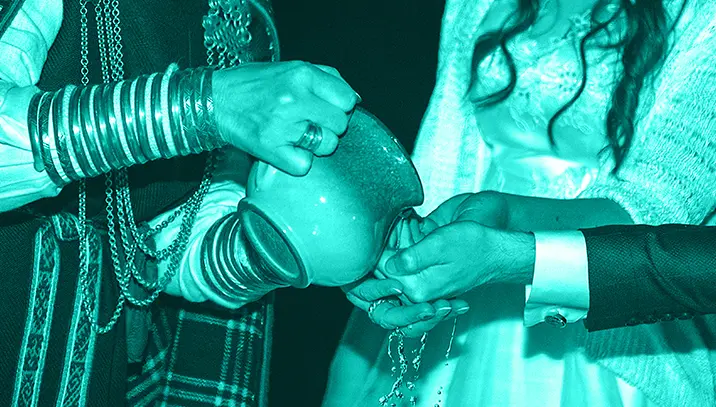
A quaich is a traditional Scottish drinking vessel, a shallow cup with two handles that the couple uses to share a drink during the post-wedding celebration. This act symbolizes unity and trust.
Symbolism
The Claddagh
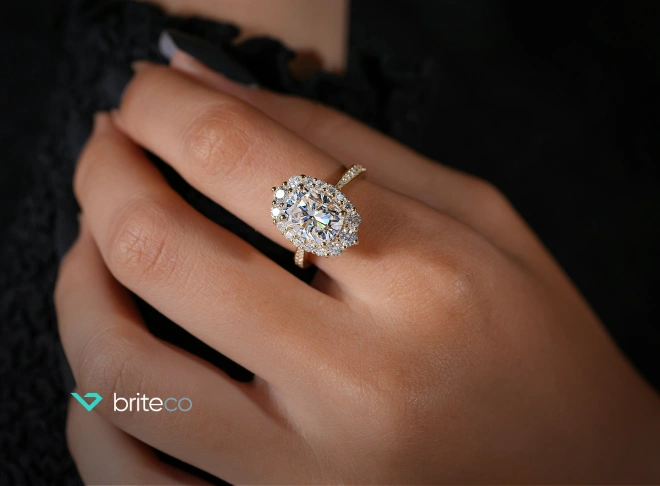
The claddagh is an iconic Irish design featuring two hands holding a heart that’s topped with a crown. It symbolizes friendship, love, and loyalty, making it a popular motif for wedding or engagement rings or decorations that emphasize the couple’s bond.
The Celtic Cross
The Celtic cross is a design based on a cross with a circle around the point where the two lines meet. Often included in Celtic Christian wedding ceremonies, it represents faith and unity.
The Celtic Knot
Celtic knots, with their interwoven patterns and endless loops, represent eternity and connection. They are often incorporated into wedding decor, jewelry, or ceremony elements to symbolize the infinite bond of love and commitment.
The Triquetra
The triquetra, or trinity knot, is a simpler Celtic knot design made with three arcs that connect to form a three-pointed shape. It can have a few different meanings at a wedding, like past, present, and future; mind, body, and spirit; the vow to love, honor, and protect your spouse; or the Christian Holy Trinity.
Celtic Music and Dance
- Bagpipes: Ireland and Scotland each have their own distinct types of pipes with their own unique sounds.
- What the Fugue Are Uilleann Pipes? Learn more about this Irish instrument and how it’s played on this page.
- Folk Music of Other Celtic Regions: Often overlooked in the realm of Celtic culture are places with Celtic roots beyond Scotland and Ireland, including Wales, the English county of Cornwall, the Isle of Man, and Brittany in northwestern France, each of which has its own musical traditions.
- Welsh Folk Songs: You can listen to a variety of traditional Welsh folk songs on this page, each presented with the lyrics so you can learn them yourself.
- Traditional Irish Music: Irish music encompasses a variety of styles developed over the centuries.
- Scottish Music: While bagpipes do play a prominent role in traditional Scottish music, there’s much more to it than just pipes.
- Dancing in the Celtic Nations: Some commonalities exist between Celtic dance styles in different areas, but each part of the region also has its own unique forms and traditions.
- The History of Irish Dance: The earliest documented evidence of Irish dance traces back to 1413.
Author